Insights

What's New at Balboa Line.

Company news, research notes and a window into life at the firm.

8 posts

Culture

Inside Balboa Line's First Model Hackathon: 48 Hours, 11 Teams, One Live Strategy

Researchers, engineers and operations staff formed mixed teams to take a trading idea from raw data to a paper-traded model in two days.

The brief was simple and slightly unreasonable: in 48 hours, take an idea from a blank notebook to a model running against live market data in our paper-trading environment. Eleven teams signed up, deliberately mixed so that every group had at least one researcher, one engineer and one person from operations or compliance.

The winning team built a short-horizon model for index futures that conditions on cross-venue order-book imbalance, using a compact architecture that fits comfortably inside our latency budget. It passed model review two weeks later and is now the first hackathon project to earn a capital allocation.

Just as valuable were the lessons about our own platform. Teams filed 37 improvement tickets against the research tooling over the weekend, more than half of which have already shipped.

Colleagues gesturing during a discussion around a laptop
Insights

Small Models, Fast Markets: Why We Train Specialists Instead of Giants

A note from our research leadership on why a portfolio of specialised models beats a single monolithic one for trading at scale.

There is a tempting story in which one very large model learns everything about every market. We don't believe it, and not because we lack the compute. Markets differ in microstructure, data density and regime behaviour, and a model that must serve all of them tends to serve none of them well at the latencies that matter.

Our approach is a portfolio of specialists: many smaller models, each owned by a team, each trained on the data and horizon it actually trades, and each small enough to be understood, audited and retrained quickly when the world changes.

This is also an organisational choice. Specialists map cleanly onto small, accountable teams, and a portfolio of them diversifies model risk the same way a portfolio of strategies diversifies market risk.

Chalkboard covered in mathematical diagrams and equations
Culture

From Research Fellow to Model Owner: Amara's First Year at Balboa Line

Amara joined our inaugural Summer Research Fellowship. Twelve months later she owns a production model. She shares what the path looked like.

"I expected to spend my fellowship cleaning data," Amara says. "Instead, my second week ended with my first experiment running on the cluster, and my mentor asking what I wanted to test next."

The fellowship is structured around a single question each fellow chooses with their team lead. Amara's was about whether regime-detection features improved a family of FX models. The answer was a qualified yes, and the work became her first contribution to a live system.

Today she owns that model's lifecycle end to end, from retraining schedules to the monthly model review. "The thing I value most is that nobody here is protective of a problem. If you can show evidence, you get to work on it."

Two engineers working at desks with multiple monitors
Insights

Explainability Is a Risk Control: How We Audit Learning Systems Before They Trade

Every Balboa Line model must be explainable to the people who did not build it. Here is what that means in practice.

Before any model touches capital, it goes through a review with people who had no part in building it. The team presents a model card: what it predicts, which features it relies on, how it behaves at the edges of its training distribution, and what will cause it to be switched off.

We treat explainability as a control rather than a courtesy. If a model's behaviour cannot be summarised well enough for risk and compliance to set sensible limits, it is not ready, however good the backtest looks.

The practical toolkit is unglamorous: feature attribution, counterfactual probes, stress scenarios replayed against historical dislocations, and hard pre-trade limits enforced outside the model itself.

Abstract rendering of translucent spheres connected by thin rods
Company News

Balboa Line Opens Willemstad Office in Curaçao

Our second office puts trading operations, risk and digital-assets research in a long-established Caribbean financial centre, an hour ahead of headquarters.

Balboa Line has opened an office in Willemstad, Curaçao, its first outside Panama City. The team will house trading operations and risk, lead our FX and digital-assets research, and extend our coverage into the European afternoon from Atlantic time.

"Curaçao combines a mature international financial sector, Dutch legal roots and a time zone that overlaps both Europe and the full US session," said our founder and chief executive. "It is also a short flight from Panama City, which keeps us one firm rather than a headquarters with a satellite."

The office opens with a dozen researchers, engineers and operations specialists and is hiring across quantitative research, data platform engineering, trading operations and compliance.

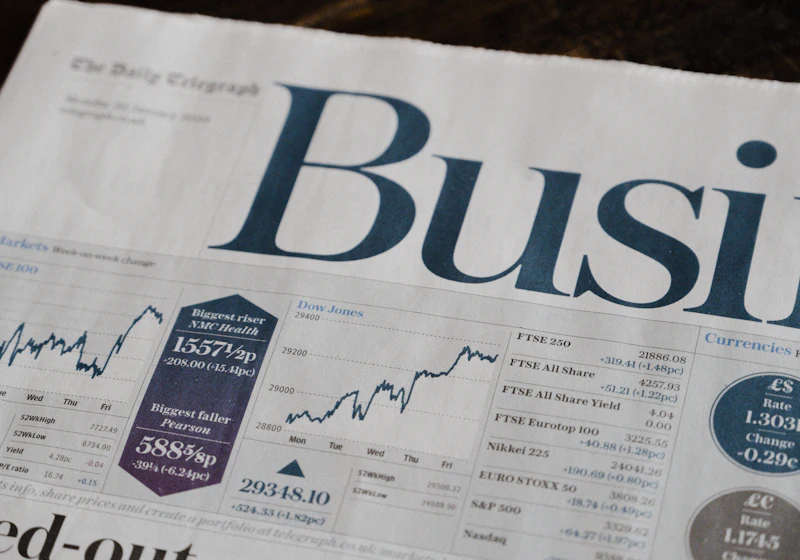
Close-up of a business newspaper with market charts
Insights

Reproducible Research at Market Speed: Notes From Our Data Platform Team

How we make every experiment reproducible without slowing researchers down.

Reproducibility is easy to promise and hard to keep when data arrives at millions of events per second. Our platform team's rule is that every experiment must be re-runnable from its identifier alone: same data snapshot, same code revision, same configuration, same result.

The building blocks are versioned, immutable datasets, a feature store with point-in-time correctness, and experiment tracking that captures the environment as well as the metrics.

The payoff is speed, not bureaucracy. When researchers trust the inputs, they spend their time on ideas rather than on debugging why last week's result cannot be repeated.

Hand-drawn line chart on paper beside a ruler and pens
Company News

Balboa Line Joins Industry Working Group on AI Governance in Trading

We are contributing to an industry effort to define practical standards for model governance in electronic markets.

Balboa Line has joined an industry working group developing practical guidance on the governance of machine-learning models in trading. The group brings together trading firms, exchanges and technology providers.

Our contribution focuses on model documentation, pre-deployment review and the controls that sit around a model in production, areas where we believe shared standards benefit the whole market.

"Good governance is not a constraint on innovation, it is what makes innovation durable," said our chief operating officer.

Abstract three-dimensional render of colourful voxel structures
Culture

Employee Spotlight: Tomás, Execution Infrastructure Lead

Tomás leads the team that carries model decisions to the market in microseconds. He talks about ownership, on-call and why he joined a startup.

Tomás joined Balboa Line from a large exchange operator, where he worked on matching-engine performance. "I wanted to be closer to the decisions the infrastructure serves," he says. "Here the model team sits ten metres away."

His team owns market connectivity, the order gateway and the pre-trade risk checks that every order passes through. "We write the fast path in Rust and C++, and we measure everything. If a model's edge is 40 microseconds, we cannot spend 50 getting the order out."

On culture: "Small firm, serious standards. You own your systems end to end, and that includes being on call for them. I would not have it any other way."

Three colleagues laughing while working together at a table

For media enquiries, write to media@balboaline.com.

Reach your greatest potential

Help Us Build the Next Market.

We bring the platform, the capital and the research culture. You bring the ideas. Take the next step to learn about our teams, our hiring process and life at Balboa Line.